
If a water heater let go in your Perris garage last night, or a slab leak has been soaking the carpet under a back bedroom for who knows how long, you’re probably staring at a mitigation estimate and wondering if the number is reasonable. Here’s the direct answer: water damage restoration in Perris, CA typically runs $1,300 to $15,000 or more, depending on how many rooms are wet, how contaminated the water is, and whether drywall, flooring, or framing has to come out rather than just dry in place. A single soaked bedroom and a sewage backup that sat for two days are not the same bill. Here’s how the pricing actually breaks down.
How Much Does Water Damage Restoration Cost in Perris, CA?
Most jobs fall into one of five scopes, and the price tracks the scope, not the address. A small, contained leak in one room costs a fraction of a whole-house flood with contaminated water and a full rebuild behind it.
| Scope | Typical Cost Range |
|---|---|
| Single room, Category 1 clean water, minor drywall/carpet | $1,300 - $3,200 |
| Multiple rooms, Category 1-2 water, carpet + drywall + baseboards | $3,200 - $7,500 |
| Whole-house or multi-day flood, large square footage, Class 3-4 drying | $7,500 - $15,000+ |
| Category 3 water (sewage backup, contaminated flooding) | $5,500 - $13,000+ |
| Structural drying equipment only (extraction, air movers, dehumidifiers) | $500 - $1,800 per day of equipment and monitoring |
| Rebuild/reconstruction after mitigation (drywall, flooring, paint, trim) | $2 - $10+ per square foot, depending on finish level |
These are typical industry ranges, not a quote. Every loss is different, and a reputable company gives you a written scope of work before anything is torn out, not a verbal ballpark over the phone.
What Does Water Damage Restoration Cost Per Square Foot?
Most restoration companies price structural drying by the square foot, and in California that mitigation work typically runs $3.75 to $7.50 per square foot, before any rebuild is added. The low end covers clean water on hard flooring with quick response; the high end covers gray or black water on carpet, pad, and drywall that’s been wet for a day or more.
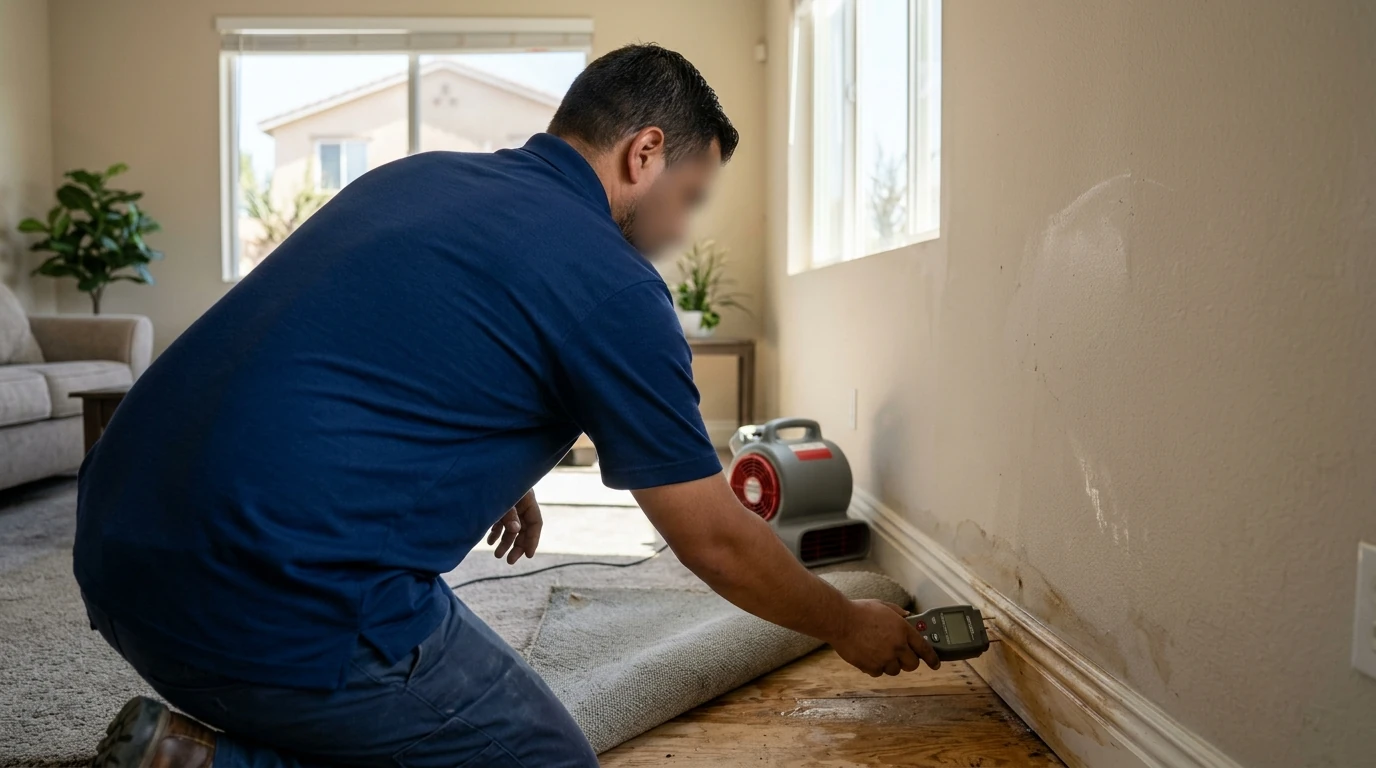
Online cost calculators can give you a ballpark, but they can’t see your house. They don’t know if your Perris home has a slab foundation that trapped water under the baseboards, or if the leak ran behind a wall long enough to wick up into insulation. A real number comes from an on-site moisture assessment, mapped with a moisture meter and often a thermal camera, following the ANSI/IICRC S500 standard for water damage restoration. That walkthrough is what the estimate is actually built from.
What Actually Drives the Price Up or Down?
Four things move the number more than anything else: the water’s category, the drying class, how many square feet are affected, and how long the water sat before anyone started extraction.
Category describes contamination level. Category 1 is clean water from a supply line or water heater. Category 2 (gray water) comes from sources like a washing machine discharge or a toilet overflow with urine but no feces. Category 3 (black water) includes sewage, any backup from beyond the trap, and storm or flood water from outside. Category 2 and 3 losses usually mean removing porous materials like carpet pad and drywall rather than drying them in place, plus antimicrobial treatment, which raises the cost.
Class (1 through 4) describes how hard the space is to dry. Class 4 jobs, think hardwood floors, plaster, or concrete that’s absorbed water, need specialty drying equipment and more time.
Time matters because mold can begin growing on wet materials within 24 to 48 hours, according to the EPA. A leak caught the same day costs less to dry and carries less risk of a second remediation bill later.
Locally, a lot of this plays out predictably. Older homes near downtown Perris often still have galvanized or cast-iron supply lines more prone to pinhole leaks, while newer stucco construction off Interstate 215 and near Lake Perris tends to dry faster but can involve pricier finish materials in the rebuild. Either way, the fundamentals above are what set the final number, not the neighborhood.
Are Mitigation and Rebuild Billed as Two Different Costs?
Yes. Mitigation, meaning extraction, drying, dehumidification, and anti-microbial treatment where needed, is a separate scope from rebuild, meaning new drywall, flooring, paint, and trim. Insurance adjusters and contractors treat them as two distinct phases.
Mitigation happens first and fast, because the clock on mold growth and secondary damage doesn’t wait for a rebuild estimate. Once the structure is dry and verified with moisture readings, the rebuild scope gets written based on what was actually removed, not guessed in advance. That’s why a mitigation invoice and a reconstruction quote often arrive on different timelines, and from what can feel like two different conversations, even when it’s the same company handling both.
Does Insurance Cover Water Damage Restoration in California?
Most California homeowners policies cover sudden, accidental water damage, like a burst pipe or a water heater that fails without warning, but they generally exclude gradual leaks, long-term seepage, and flood water from outside. Sewer or drain backups and sump pump failures are typically only covered if you added a water backup endorsement to your policy.
According to the Insurance Information Institute, homeowners also have a duty to mitigate damage once it happens, meaning stopping the water and starting drying promptly protects the claim. Photograph everything before cleanup starts and keep every receipt. We cover this in more detail in Does Homeowners Insurance Cover Water Damage?, and for a broader look at pricing across the state, see How Much Does Water Damage Restoration Cost in CA?
What Happens During a Water Damage Restoration Job?
A standard job follows the same sequence whether it’s one room or a whole house:
- Inspection and moisture mapping. A technician identifies the water source, category, and how far it traveled using a moisture meter.
- Extraction. Standing water comes out first, using pumps or truck-mounted extraction equipment.
- Removal of unsalvageable materials. Soaked carpet pad, swollen baseboards, or contaminated drywall come out so the structure can actually dry.
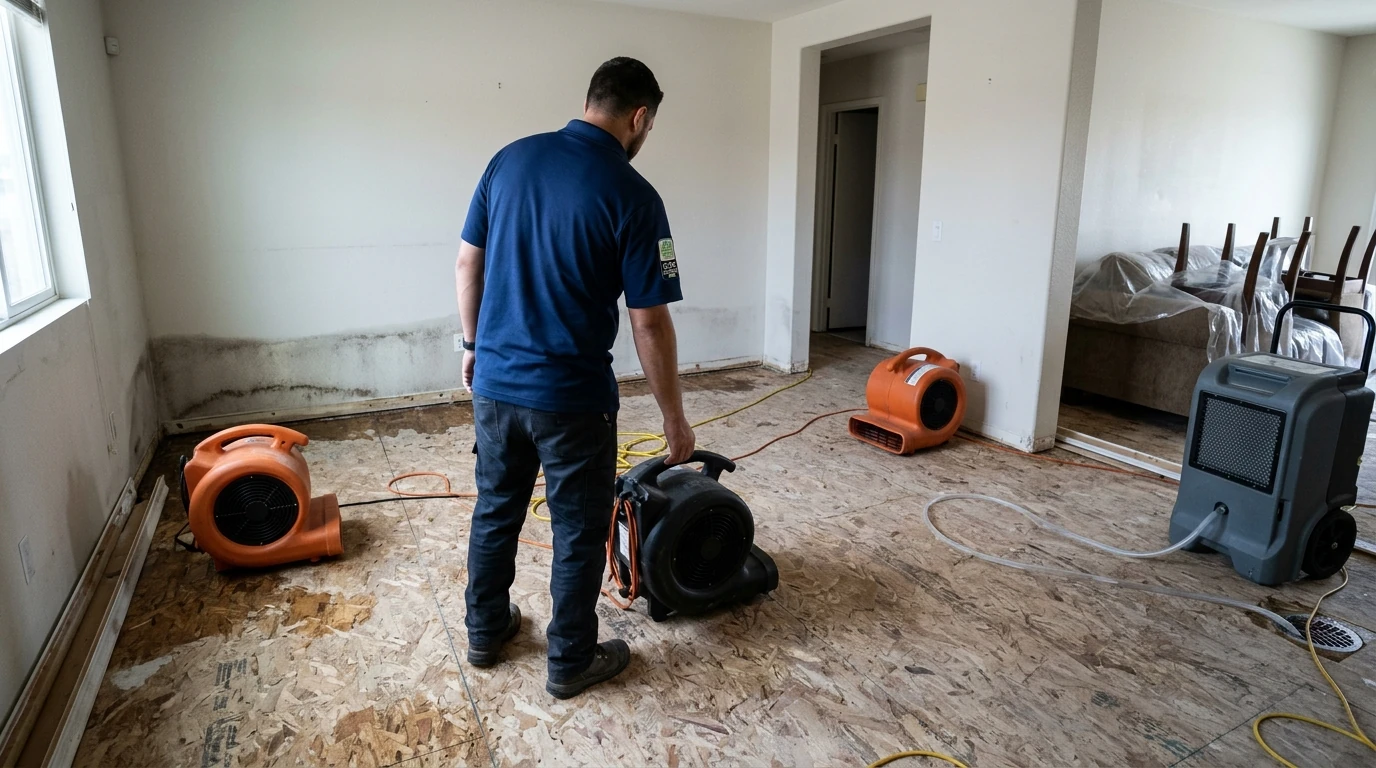
- Drying and dehumidification. Air movers and LGR dehumidifiers run for roughly 3 to 5 days, monitored daily with moisture readings until materials hit a dry standard.
- Antimicrobial treatment, applied when the loss is Category 2 or 3.
- Rebuild, once the structure is verified dry, based on an agreed scope.
Does Emergency or After-Hours Service Cost More?
Some restoration companies charge extra for nights, weekends, or holiday calls. What matters more for your final cost, though, is how fast the water gets stopped and extraction starts, since every hour a Category 1 loss sits raises the odds it needs to be treated as Category 2 or 3 by the time a crew arrives. Thunder Restoration takes calls 24/7, and the first conversation should always include a written scope before work begins, no matter what time the truck shows up.
If you’re looking at standing water right now, the fastest path to a real number is an on-site assessment, not a phone estimate. Schedule a water damage assessment or request emergency water removal if the source is still active.
About Thunder Restoration
Thunder Restoration is an IICRC Certified Firm serving Perris, CA and the surrounding Inland Empire since 2007 (CSLB license #902886, verifiable through the California Contractors State License Board). Their technicians hold IICRC Water Damage Restoration Technician (WRT) training and the company operates 24/7 water cleanup, mold remediation, fire and smoke restoration, sewage cleanup, and reconstruction services across Perris, Moreno Valley, Menifee, Murrieta, and Temecula.
Need help now? Call Thunder Restoration at (951) 479-7038.