
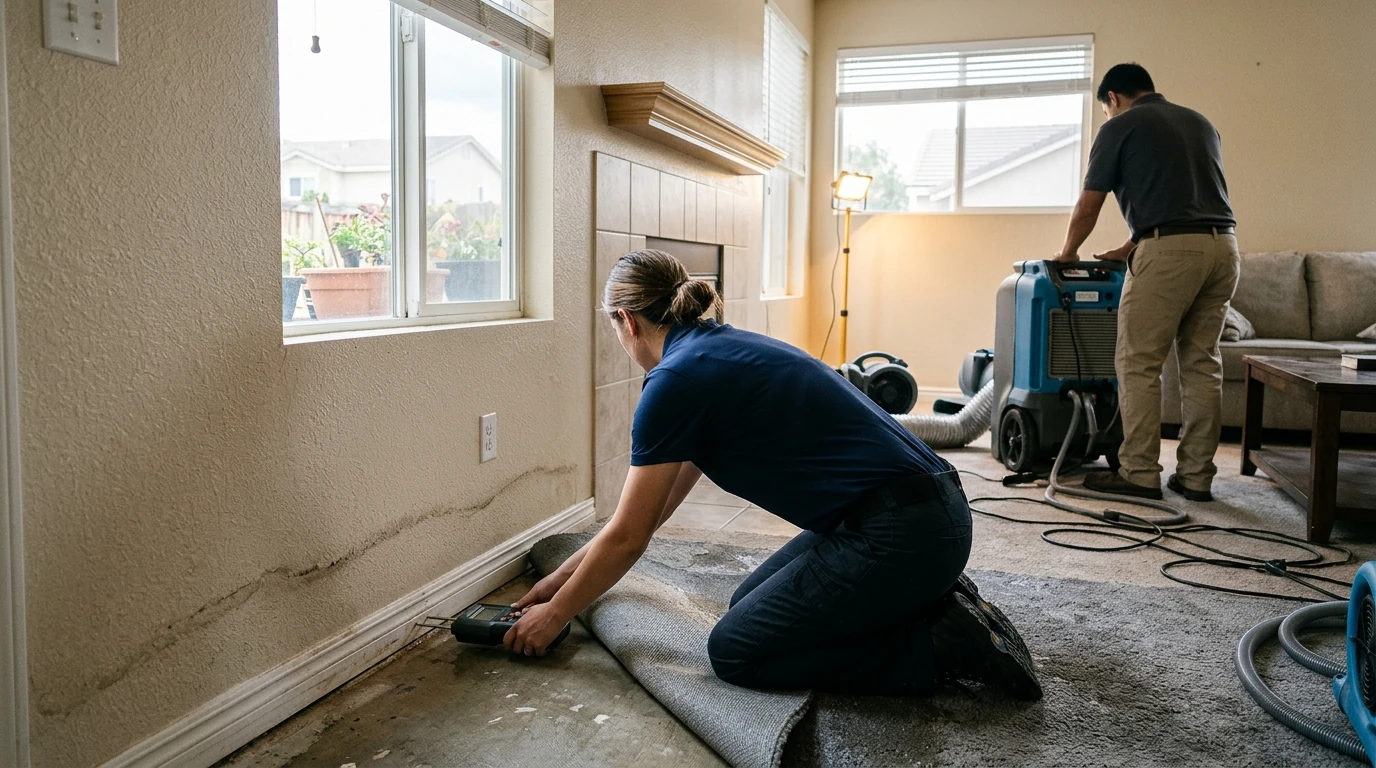
TL;DR: In California, water damage restoration typically costs $1,300 to $3,200 for a single clean-water room and $7,000 to $15,000 or more for a sewage or black-water loss. The biggest price driver is water category (clean, gray, or black) and how much square footage and material was affected before drying started. Most homeowners policies cover sudden losses like a burst pipe, but flood and sewer backup usually need separate coverage.
If a water heater let go overnight in your Perris home and you’re now standing on wet carpet with an adjuster’s number in one hand and a mop in the other, the number you actually need is a realistic cost range, not a sales pitch. Here’s what water damage restoration runs in California, what moves that number up or down, and what your insurance is likely to pay for.
How much does water damage restoration cost in CA?
Most California water damage jobs fall between $1,300 and $8,500, with severe sewage losses and whole-house floods running higher. The exact price depends on the water’s category, how many rooms are affected, and how long the water sat before a crew started extraction.
| Scenario | Typical cost range |
|---|---|
| Single room, clean water (Category 1), caught quickly | $1,300 - $3,200 |
| Multi-room extraction and structural drying | $3,500 - $7,500 |
| Category 2 (gray water) cleanup, e.g. washing machine overflow | $4,000 - $8,500 |
| Category 3 (black water/sewage) remediation | $7,000 - $15,000+ |
| Water damage with active mold growth already present | $5,000 - $12,000+ |
| Whole-house flood with reconstruction | $15,000 - $50,000+ |
These are typical industry ranges for Southern California markets, not a quote. A written scope of work, built after a moisture inspection, is the only way to know the actual number for your home.
What factors affect the price?
The water’s category under the ANSI/IICRC S500 standard is the single biggest factor in the final cost. Category 1 (clean water, like a supply line break) is the cheapest to remediate. Category 2 (gray water, like a dishwasher or washing machine discharge) costs more because contaminated materials often get removed instead of dried in place. Category 3 (black water: sewage, any backup from beyond the trap, or storm-driven flood water) costs the most because it requires antimicrobial treatment, PPE, and usually tear-out of porous materials like carpet pad and drywall.
Beyond category, a few things push the number up:
- Square footage affected. A hallway and one bedroom costs far less than a flooded first floor.
- Response time. Water sitting more than 24 to 48 hours lets drywall, subfloor, and cabinetry soak through, and mold can begin growing in that window, which is why the EPA recommends starting drying immediately.
- Materials affected. Hardwood floors, plaster, and cabinetry (IICRC’s Class 4 drying situations) take longer and cost more than drywall and carpet.
- Code-required upgrades. If permits require bringing old wiring or insulation up to current code during repairs, that adds to the rebuild line, not the drying line.
If you’re dealing with standing water right now, our burst pipe emergency checklist covers the first steps before a crew arrives.
Will insurance cover the cost?
Most standard homeowners policies cover sudden, accidental water damage, like a pipe that bursts or an appliance hose that suddenly fails, but they exclude gradual leaks and flood water. Coverage details vary by insurer and policy, so check your declarations page before assuming either way.
A few patterns hold across most California policies. Sudden losses (burst supply lines, a failed water heater) are typically covered. Gradual seepage, long-term leaks, and plain wear and tear are typically excluded as a maintenance issue. Flood damage, meaning rising water from outside the home, storm surge, or overflowing waterways, requires a separate flood policy through the National Flood Insurance Program or a private flood carrier; a standard homeowners policy does not cover it. Sewer backups and sump pump failures are also excluded on most policies unless you’ve added a water backup endorsement specifically for that coverage.
Documenting the loss protects your claim either way. Photograph the damage before cleanup starts, keep every receipt, and get a written scope of work from whoever does the mitigation. For a deeper breakdown of what’s typically covered, see our guide on whether homeowners insurance covers water damage, and the Insurance Information Institute’s overview of standard homeowners coverage.
What does the restoration process involve?
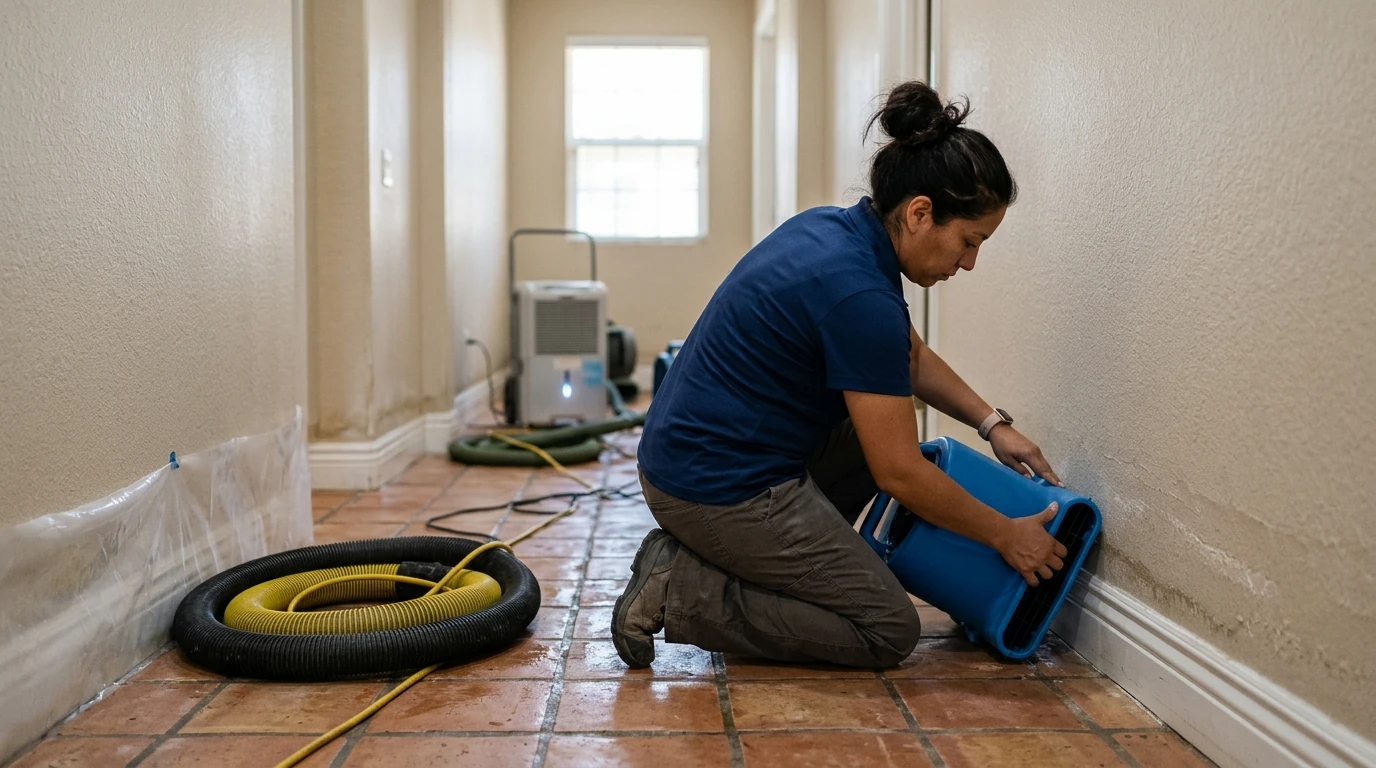
A standard water damage job moves through inspection, extraction, drying, and repair, usually in that order over several days to a couple of weeks. Skipping steps to save time, especially drying time, is how jobs end up with hidden mold later.
- Inspection and categorization. A technician uses a moisture meter and thermal imaging to map how far the water traveled and assign a water category.
- Extraction. Standing water gets pumped and vacuumed out with truck-mounted or portable extraction equipment.
- Structural drying. Air movers and LGR dehumidifiers run for several days, dried to the ANSI/IICRC S500 standard, with daily moisture checks to confirm materials are back to a dry standard, not just surface-dry.
- Monitoring and antimicrobial treatment (for Category 2 or 3 losses) to address contamination before materials are closed back up.
- Repairs and reconstruction, from drywall and flooring to full rebuilds for large losses.
If the source of the water hasn’t been stopped yet, like a leak still running behind a wall, that’s a plumbing call first. See our first 24 hours checklist for what to do before a restoration crew even arrives.
For a water loss anywhere from Perris out to Menifee, Murrieta, or Moreno Valley, Thunder Restoration provides a written inspection and scope of work before any work begins, so the number you’re quoted matches the job in front of you, not an industry average. Call Thunder Restoration at (951) 479-7038 to schedule a moisture assessment.
About Thunder Restoration
Thunder Restoration is an IICRC Certified Firm serving Perris, CA and the surrounding Inland Empire since 2007, holding California contractor license #902886. Their crews handle water damage restoration, sewage cleanup, emergency plumbing, storm damage, mold remediation, fire and smoke restoration, and reconstruction across Perris, Riverside, Moreno Valley, Menifee, Murrieta, and Temecula, available 24/7.
Video Transcript
A water heater bursts overnight, and suddenly you’re standing on soaked carpet, wondering exactly what water damage restoration actually costs you in California. Most jobs in California range from about thirteen hundred dollars for one clean room up to fifteen thousand dollars or more for serious sewage damage. The water’s category drives most of the price. Clean water from a burst pipe costs far less to fix than contaminated gray or black water. Square footage, response time, and the materials involved matter too. Water sitting more than forty eight hours lets mold start growing fast. Hardwood floors, plaster, and custom cabinetry take much longer to dry than carpet and drywall, and that pushes your final cost higher. Most homeowners policies cover sudden losses, like a burst pipe or a failed appliance hose, but gradual leaks are usually excluded. Flood water and sewer backups typically need separate coverage. Check your policy’s declarations page before assuming what’s actually included. Photograph the damage right away, save every receipt, and get a written scope of work. Good documentation helps support your claim. Your contractor should inspect the damage, extract standing water, then dry everything to industry standards before any repairs even begin. Worried about water damage in your home right now? Call Thunder Restoration at (951) 479-7038 to schedule an assessment.