
TL;DR: Asbestos and lead paint are common in Perris homes and commercial buildings built before 1980, hidden in popcorn ceilings, vinyl floor tile, pipe wrap, and old paint layers. Abatement means professional testing, containment, and removal done under EPA and Cal/OSHA rules, not a weekend DIY project. A licensed contractor sets up negative-pressure containment, uses HEPA filtration, and confirms clearance testing before the space is safe to reopen.
If you’re planning a kitchen remodel or a window replacement on a Perris home built before 1980 and just found crumbling vinyl floor tile or peeling exterior paint underneath, stop before you start demo. Homes and commercial buildings across this part of Riverside County, including Moreno Valley, Menifee, and Lake Elsinore, routinely used asbestos-containing materials and lead-based paint during that era. Disturbing them without testing and proper containment can spread contamination through the whole structure and create real liability under state and federal rules. Here’s what abatement actually involves, how to know if you need it, and what happens if you skip it.
What Counts as Asbestos & Lead Abatement in an Older Perris Home?
Abatement means the professional testing, containment, and removal of asbestos-containing materials or lead-based paint from a structure, not simple cleanup or patching over the problem.
In Perris and the surrounding growth corridor, from postwar tract homes to the agricultural-era homesteads scattered around Mead Valley and Good Hope, the materials that most often trigger abatement are popcorn ceiling texture applied through the late 1970s, vinyl floor tile and the black mastic underneath it, pipe wrap and duct insulation, old stucco or joint compound, and any paint applied before 1978, when the federal government banned lead in residential paint.
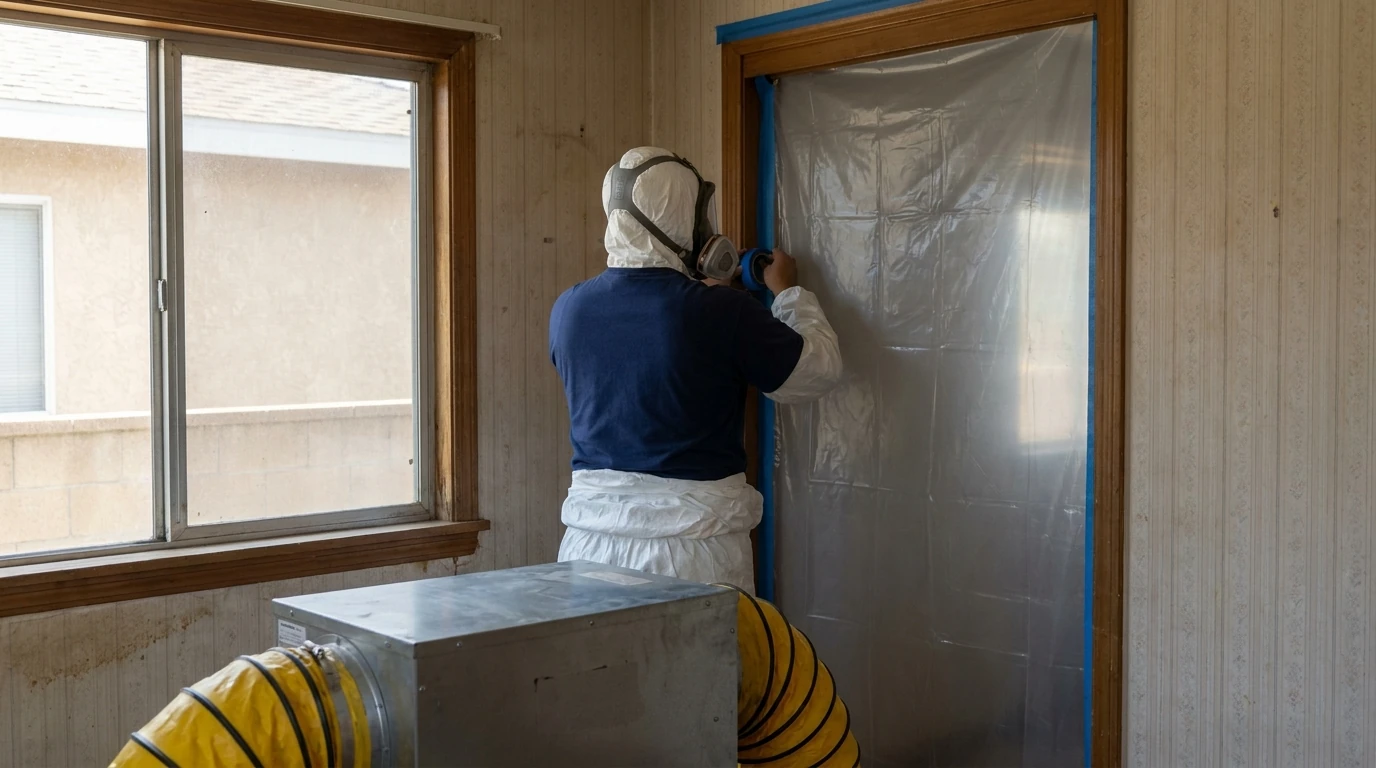
Abatement is different from general demolition. It requires containment barriers, negative-pressure air machines, specific PPE, and waste handling rules that a standard remodeling crew is not set up to follow.
How Do You Know If Your Home Has Asbestos or Lead Paint?
The only reliable way to know is lab testing. Visual inspection alone can’t confirm either material, even for someone experienced in older housing stock.
For asbestos, a technician collects small bulk samples of the suspect material (floor tile, ceiling texture, insulation) and sends them to an accredited lab for polarized light microscopy analysis. For lead, testing is usually done with an XRF analyzer on painted surfaces or by sending paint chips to a lab. Under the EPA’s Lead Renovation, Repair and Painting (RRP) Program, any home built before 1978 is presumed to have lead paint unless testing proves otherwise, and contractors disturbing more than a minimal area must follow work practices. The EPA’s asbestos page covers where the material commonly turns up in homes of this age.
What Does the Abatement Process Actually Involve?
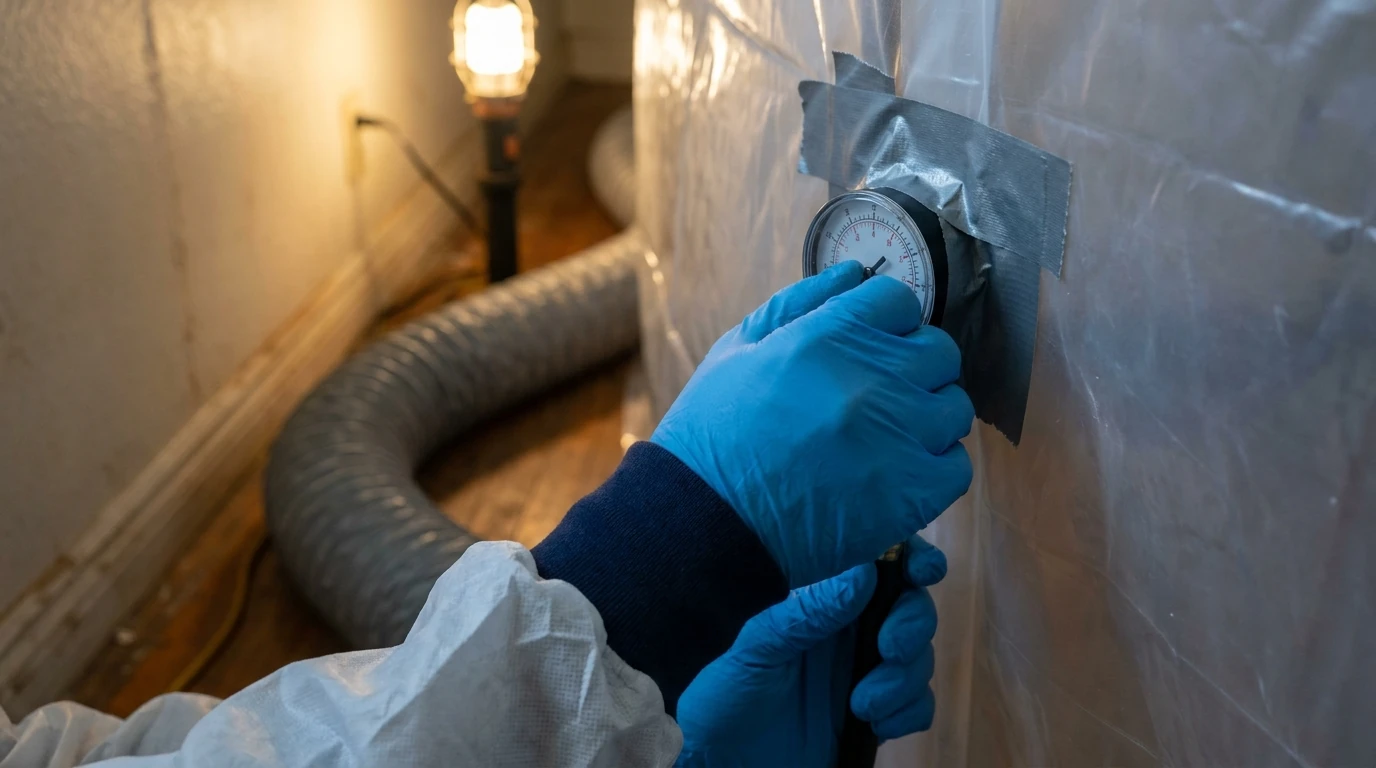
A typical abatement job involves containment, negative-pressure air filtration, wet removal methods, and clearance testing before the area is cleared to reopen.
The general sequence looks like this:
- Containment goes up first: taped poly sheeting seals off the work area from the rest of the structure.
- Negative-air machines with HEPA filtration run continuously, pulling air out of the containment zone so fibers or dust can’t migrate into occupied rooms.
- Crews work in full protective gear, including Tyvek suits and P100-rated respirators, and use wet methods during removal to keep fibers and dust from becoming airborne.
- Waste is double-bagged and disposed of at a facility licensed to accept asbestos or lead-contaminated material, not a standard construction dumpster.
- Clearance testing confirms air quality is back to a safe level before containment comes down and the renovation can continue.
That last step matters more than most homeowners realize. If you’ve chosen a contractor already, our guide to choosing a restoration company in Perris covers the licensing and documentation questions worth asking before anyone starts tearing into a wall.
What Happens If You Skip Professional Abatement?
Disturbing asbestos or lead paint without proper containment spreads fine particles through HVAC systems and settles into dust across the home, creating a long-term exposure risk and a disclosure problem at resale.
Asbestos fibers are linked to serious lung disease, though symptoms can take decades to appear, which is exactly why containment during the work matters more than how someone feels afterward. Lead dust is particularly dangerous for children and pregnant women, since even low-level exposure affects developing nervous systems. There’s also a practical cost: many landfills and transfer stations will refuse untested demolition debris from pre-1980 structures, which can stall a remodel entirely if testing wasn’t done upfront.
There’s a licensing angle too. California requires a licensed contractor for most structural renovation work, and you can verify any contractor’s license status directly with the CSLB before signing a contract.
What Should You Do Before You Start a Perris Renovation?
Schedule testing and inspection before any demolition begins, especially if the structure was built before 1978 or you simply don’t know its age.
Thunder Restoration has handled remediation work across Perris and the surrounding Inland Empire since 2007 (CSLB license #902886), and our crews are OSHA trained to follow EPA and Cal/OSHA protocols for containment, PPE, and disposal. If you’ve found suspect material during a remodel, request an inspection before the next phase of work starts so you have a written scope instead of a guess.
A remodel timeline can survive a testing delay. It’s much harder to undo spreading contaminated dust through a home that’s already occupied.
About Thunder Restoration
Thunder Restoration is a licensed California contractor (CSLB #902886) serving Perris and the surrounding Inland Empire, including Riverside, Moreno Valley, Menifee, Murrieta, and Temecula, since 2007. The company’s crews are OSHA trained and handle asbestos abatement, lead paint abatement, water and fire damage restoration, mold remediation, and reconstruction across residential and commercial properties in the region. Written by Charlie Balan.
Need help now? Call Thunder Restoration at (951) 479-7038.